What is it all about?
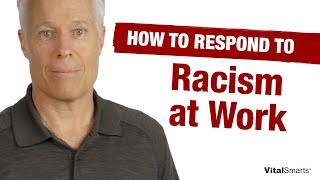
How to manage racist behaviours in a company ?
The globalisation of the economy is increasing the mix of origins within the workforce and among close and distant working partners.
Cultural diversity is an imperative for businesses: it can be found at every level - management, employees, partners, suppliers and customers.
Properly managed, diversity management can contribute to the long-term development of human resources and well-being in the workplace. This, in turn, will lead to greater employee support for the company's culture and ambitions.
How can I learn more ?
A MANAGER TELLS RACIST JOKES, AND THINGS GET OUT OF HAND IN THE FACTORY...
We're in a sorting and recycling company. Within the team, the manager tells racist jokes, and a worker of African origin feels harassed by these remarks. Tension mounts in the factory. One day, pushed to the limit, the worker loses his temper and gets angry. He damages equipment and yells insults. Management decided to fire him for gross misconduct. The team manager was also dismissed! The atmosphere was now tense among workers of different origins. A new team leader is hired, but will he restore trust in the factory?
- You're the new manager. How are you going to react?
- First, answer the question spontaneously and alone.
- Compare your answers with those of other people taking part in the exercise.
- You may discover others on the Internet yourself. Compare these sources with your answer.
- What differences do you see?
- Then decide on a final procedure that suits you for the case you have been given. Use the grid suggested in the document.
- Propose several actions to solve the problem. Discuss these with your trainer and/or colleagues.
- To finish, finalise your action plan in schematic form.
What have you learnt?
- A spontaneous reaction to a problematic situation is proposed.
- Specialist solutions are considered and professional documentation is consulted on the net.
- The spontaneous personal solution is compared with both the specialists' proposals and those of the training colleagues.
- Techniques for dealing with racist incidents in the workplace.
- Identification of sources in such situations.
- Comparison of these documents to produce a personal action plan.
- Access to specialists' proposals for dealing with intercultural conflict in a factory.
- Comparison of these proposals with the opinions emerging from the training group.
- Understand the reasons for a spontaneous reaction to a critical incident.
- Appreciate the diversity of possible reactions in a group, between specialists and novice users, between people from different backgrounds, etc.
- Understand the usefulness of this diversity.
- Be able to extract a personal synthesis from it, appropriate to your own professional context.
Conclusion
The learner is put in a decision-making situation when faced with a critical situation in a factory caused by the repetition of racist jokes against African workers. They consult specialists in intercultural mediation. He compared the solutions with his own initial reactions and those of his colleagues. From this, he came up with an action plan that was better documented and thought through. They learn how to propose it in schematic form. They can move on to more complex situations as the training progresses.
English
Italiano (Italia)
Ελληνικά
Español (España)
Français (France)
Svenska